Showing posts with label War of 1812. Show all posts

Wednesday, August 12, 2026

Of UELs, 1812 Vets, and Willeys

On July 26, I attended the Willey Cemetery memorial service. This quiet graveyard at 5267 Gentleman Drive, just off Thames Road in the former Ekfrid Township, was busier that day than it had been in years, as it was officially dedicated as a United Empire Loyalist (UEL) Burial Ground. A War of 1812 veteran buried here was honoured at the same time. The event, sponsored by UELAC Western Ontario Branch and Glencoe & District Historical Society, reminds "Old Stock" Canadians who we are and why we're here. 


Piper Rob Easton performs at Willey Cemetery.

Who were the United Empire Loyalists and why do they matter? Well, they were the foundational English-speaking settlers who fled the fledgling United States to remain loyal to Britain. Their presence shaped Canada's demographics and formed our politics and culture for generations. Contrary to American myths, those loyal to Britain were rarely wealthy or privileged. According to the United Empire Loyalist flyer handed out at the event, most Loyalists were farmers and craftsmen. Large numbers of them were Pennsylvania Germans, African Americans, or Indigenous.  This diverse group of people had only one thing in common: they believed the disputes between the Colonies and Britain's Parliament over taxation and trade did not justify a rebellion. Nor were they a small number. An estimated 80,000 people preferred to leave the mutinous colonies rather than stay in the new republic.

As for the War of 1812, it marked the successful defence of what was then British North America against American invasion. The struggle united British regular troops, local militias, and Indigenous warriors in a fight to remain un-American. By so doing, they laid the foundation for a distinct, continuing national identity. Many of us are still grateful.* 

After opening words from various politicians, Glencoe Historical Society member Harold Caruthers, UE,** gave attendees a history of the Willey family and the cemetery that bears their name. The Willey family originally hailed from Vermont, and, after a brief stint in Lower Canada, moved to the Elgin side of the Thames River in 1819. Bray Willey and his wife Christiana McNaughton had a family of nine children who owned farms on both the Elgin and Middlesex sides of the Thames. Various members of this family are buried here and were listed in the programme we received. 


The first burial was that of a Willey child in 1850, but pioneers of other names are buried here too. The programme says the cemetery was "cleaned up" in 1975. At that time, the Willey family installed their family gravestones in a cement cairn. In 1983, the township of Ekfrid gathered stones from several nearby abandoned cemeteries and placed them into an extension cairn. Some McRae stones were later moved back to the McRae site.***

Harold introduced Master of Ceremonies Retired Major Greg Childs, who gave us a brief background of the Revolutionary War and the War of 1812. Major Greg was fair and balanced as he explained the origins of both wars.****

Then we proceeded to the main event, honouring Corporal John Phillips, UEL (1751-1844) and Sergeant Peter Phillips, UE (1786-1866). John, born in Trenton, NJ, fought in the 2nd Battalion New Jersey Volunteers, commanded by Colonel Isaac Allen. Discharged at Saint John, NB, in 1784, he and his wife, Isabella Phinney, and family settled on a New Brunswick land grant. He later moved to Norwich Township, Oxford County in 1812. By 1822, he and his family were in Southwold Township, Elgin County. The family last moved in 1828 over the river to Ekfrid, which explains why John and Isabella's tombstones are at Willey Cemetery. Their children settled throughout Elgin, Middlesex, Kent and - oh dear - back to the States in Michigan. 

Their third child, Peter, served in the 1st Regiment Oxford Militia during the War of 1812. In 1815, he was promoted to sergeant. After the war, in 1817, he married Elizabeth Neville in Fingal and had ten children with her. After 15 years in Elgin, they too moved to Ekfrid. They are also buried at Willey, as are two of their daughters, Isabel and Elizabeth,  who married David Willey and Thomas Kirkwood respectively. Peter's older brothers Archie and John also served in the Oxford Militia during the war but are buried in Southwold Township and Kent County. All three sons fought at the bloody battle of Lundy's Lane. 


Next, historical reenactors fired some very loud volleys:


Then came the laying of wreaths by organizations such as the Royal Canadian Regiment,  Royal Canadian Legion, UELAC, GDHS, the County of Middlesex, the Township of Southwest Middlesex (of which Ekfrid is now a part), and the Chippewas of the Thames, represented by Elder Maxine Hendrick.*****


Then we sang God Save the King. Oh, don't worry, O Canada was sung too, at the beginning of the event. Interestingly, I think a few people sang "in all thy sons command" instead of "in all of us command." Forgetfulness or continuing to honour our sons?

Finally, an opportunity to chat, look at displays, and soak up the atmosphere:


Like most rural cemeteries, Willey needs further restoration. This broken gravestone is nearly swallowed by the surrounding brush. 

* For the record, these are not my ancestors, nor do my people stretch back that far in Canada. My earliest relatives on this continent settled in Oxford County in the 1820s.

**Descendants of UELs may add the letters UE after their names, once their genealogical link is proven. This is Canada's only hereditary title. For more info, see the UELAC website, linked above.

*** I overheard a rumour that some members of the McRae family weren't pleased to have the stones moved in the first place. Some well-meaning attempts to honour our ancestors can backfire. 

**** Perhaps it's appropriate to present both sides of these conflicts, but I'd have been more pro-Britain myself. After all, this is Canada. And if I'd been living in the Thirteen Colonies in 1776, I'd have been a Loyalist myself. My reasons are as follows:

  • I prefer stable ongoing traditions to the chaos of war and revolution. 
  • Britain had the world's most powerful navy and a highly-trained professional army. Any war with such a superpower, even if won, would be protracted, costly, and bloody. 
  • Siding with the global superpower seems more logical and safer than betting on a poorly-supplied, untrained amateur militia. 
  • I'd be concerned that the "patriots" would allow "mob rule" and be nastier than the British.
  • King George III wasn't a "tyrant." He was a conscientious constitutional monarch who admired the Magna Carta. He never vetoed acts of Parliament, respected common law, and functioned largely through his ministers. The "tyrant" label was American propaganda used to justify revolution. 
  • As Samuel Johnson wrote in 1775: "How is it that we hear the loudest yelps for liberty among the drivers of the negroes?" Imagine complaining about British control and taxation while keeping one's fellow humans in chains! I'm aware that only a minority of Americans owned slaves, but the optics looked bad.
  • I'd have been tarred and feathered and have no choice but to leave. 
As for the War of 1812, they didn't let women fight but I'd have defended my cabin with my pitchfork, if necessary.

***** My understanding is that, during the War of 1812, the Chippewas of the Thames allied with the British and Tecumseh's Confederacy to defend their lands. Their warriors fought in key frontier engagements, notably the 1813 Battle of the Thames, where Tecumseh was killed. Hence, an entirely appropriate Indigenous presence at this event. 

Thursday, July 17, 2025

Wonderful Whimsy

You never know what you'll find in London & Southwestern Ontario, especially when you're not even looking for it. It's just a matter of keeping one's eyes open ...

 
Do NOT step onto this London balcony.

The middle of nowhere.

London's best architecture.

One of many stone monkeys climbs Oxford County Courthouse. Satire on local politicians?

Where else but St. Marys would you find Ye Olde Limestone Drinking Fountain?

Next time you have a rough day, remember Mr. Shea.

These guys, Hensall.


Decorative eyebrow window or Attic Alcatraz? London.

Memorial to a War of 1812 veteran, Elgin County.*

A bandshell porch in Old North London, a lovely place on a summer day.

In Seaforth, even the garbage bins have civic pride.


Abandoned railway lines are everywhere.

Stone pineapple, London. A sign of wealth, likely because of their rarity and the difficulty of obtaining them. Also a sign of hospitality and friendship throughout the Western world.

Duh!


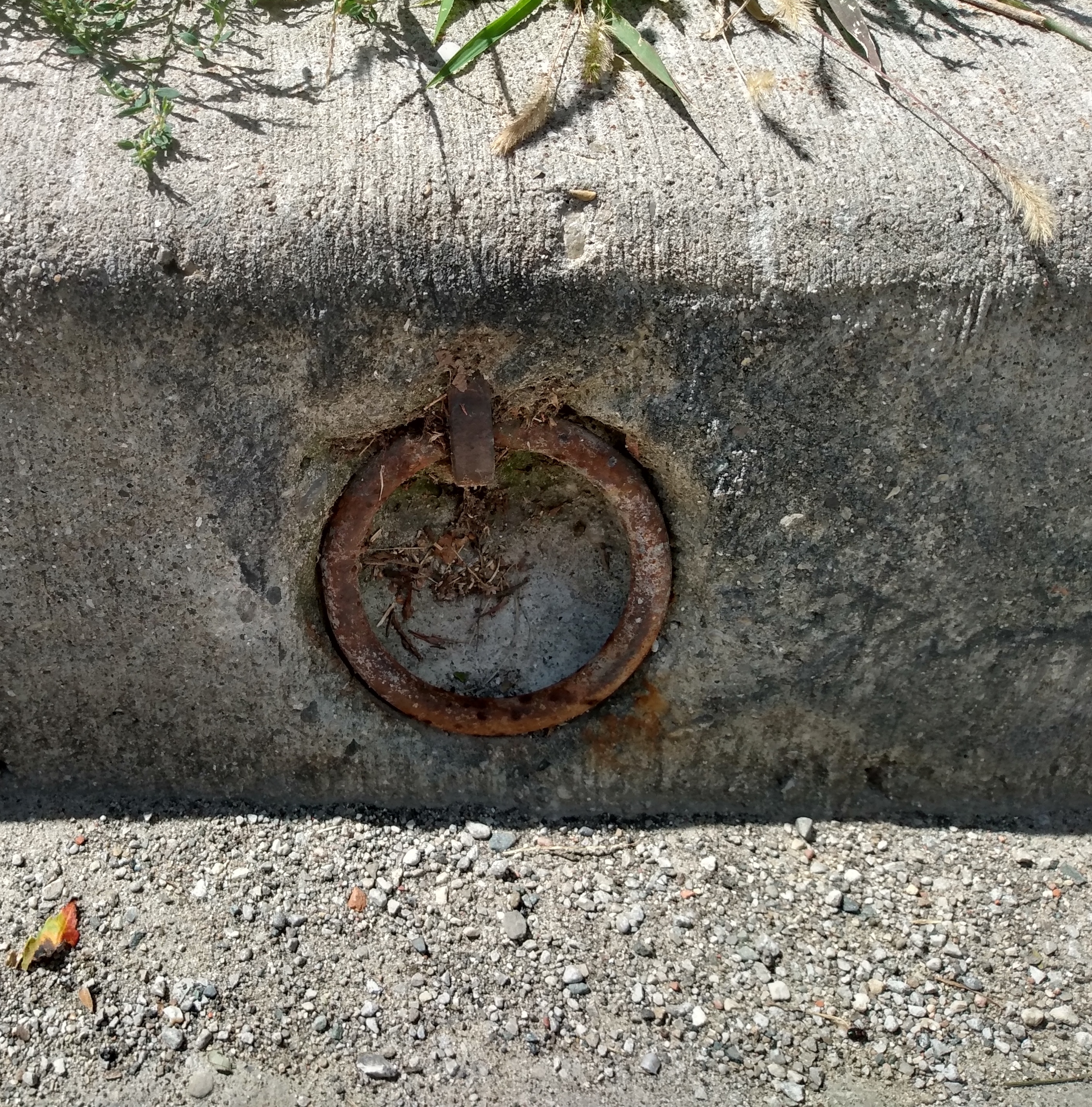
Ring in curb on Prospect Avenue, London, once used for hitching horses.


A sorting hat, straight from Hogwarts.

Preserved wooden grave marker, Birr Cemetery.

Folding seat in choir, St. John's, Arva.

Photos of the old days on St. Marys shop front.


Staircase to the underground Vansittart family mausoleum, Old St. Paul's, Woodstock.

Ghost sign for Green Valley Motel, Elginfield. Motel torn down years ago.

Gatepost on a wealthy family's home, Mitchell. Clustered grapes symbolize abundance, wealth and good fortune. They also represent fertility, possibly in the sense of production and growth.

Mural commemorating local veterans, Melbourne Legion Hall.

When you're investigating a rural cemetery and the neighbours come to help.

Apparently this hamlet is dangerous.

Damaged grave photo, Elgin County.

Axe marks on an old timber, Arva Flour Mill.

Another visitor at the Arva Mill, not welcome inside, waddled in a huff to Medway Creek.

These old general stores, once found everywhere, are now a rarity. If you find one, don't pass by.
Drop in and BUY SOMETHING.

Old wooden windows are becoming rare too.

Souvenir hunters still chip pieces off the Donnelly monument in Lucan.

Carving on London's Old Central Library, Queens Avenue.

@#%&* metal thieves. Monument at Burwell's Corners, Elgin County.

Gravestone in German Gothic script. No, not Kitchener area. Churchville, Elgin County.


"Dogs" guard a home in London.

But some homeowners prefer lions.

Magnificent entrance porch, Thornton Avenue, London.

And you thought false fronts were only in the Wild West. Nope. Alvinston.

Nature gradually takes over the former No. 4 Bomber and Gunnery School, Fingal.

Preserved mill stone, Napier.

When carriageways led to stables in the rear. London.


Clock on the empty store at Morpeth's main intersection. Still right twice a day. 

* Update: July 21: In response to a question, this is the grave of Daniel McAfee, d. July 20, 1878, aged 87 years. A sergeant in the Flank Company, 5th Regiment, Lincoln Militia, he was born in New York State and died in St. Thomas. His grave (below) is at Seminary Cemetery, 6150 Centennial Road (at Sparta Line), Yarmouth Township, Elgin County. See here for more details. Text: "He served in the War of 1812, Fought Under Gen. Sir Isaac Brock, Queenston Heights, and was at the taking of Detroit ... "